The Greatest Show on Earth Awaits You
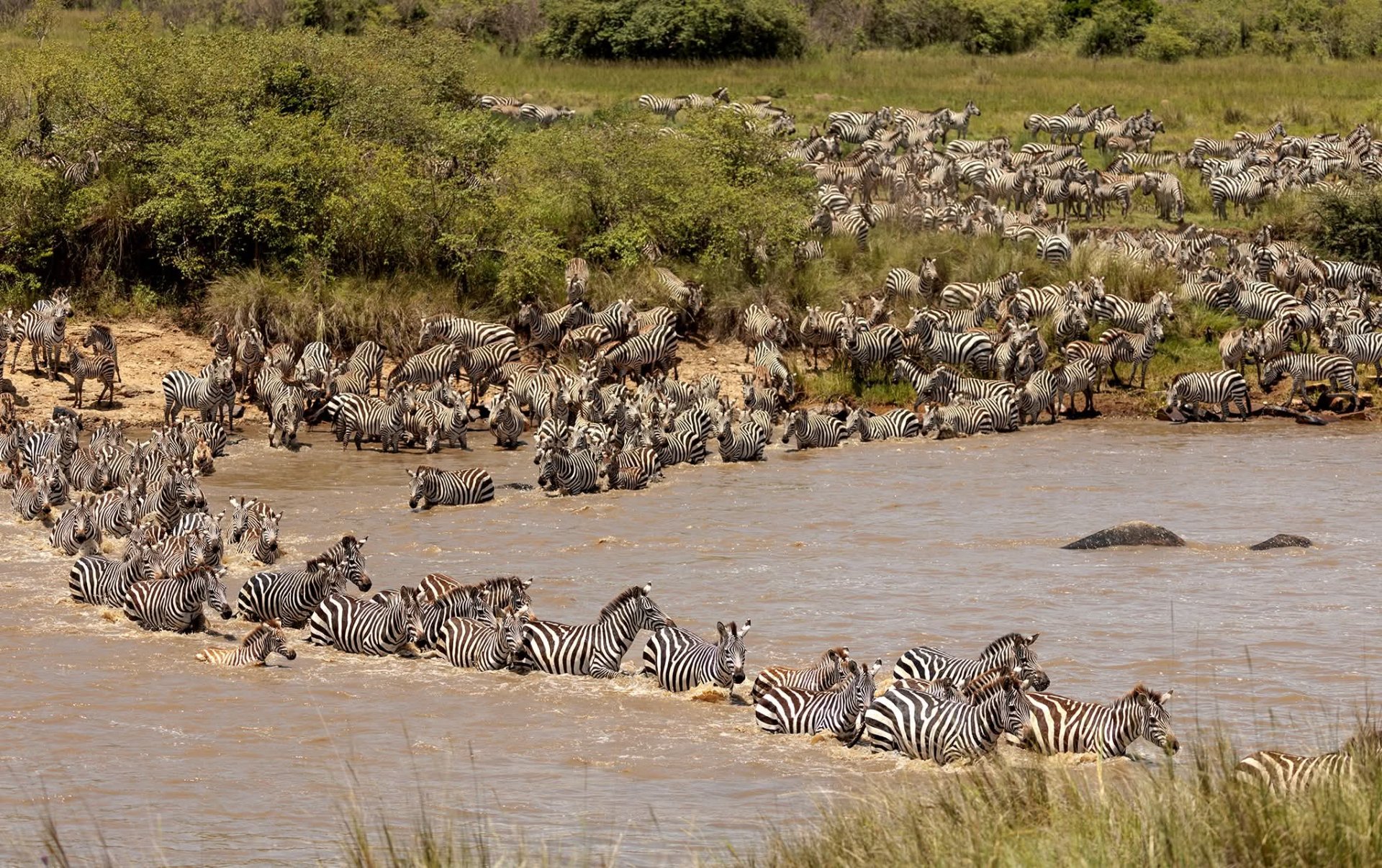
Follow 1.5 million wildebeest, zebras, and gazelles across the legendary Serengeti plains — a 1,800-mile journey of raw survival and breathtaking beauty.
The Great Migration is often imagined as a single dramatic river crossing. In reality, it is a continuous 12-month cycle — the herds never stop moving. Understanding this cycle is the key to positioning yourself for the experience you want.
Nature's Most
Epic Odyssey
Every year, over 1.5 million wildebeest, joined by hundreds of thousands of zebras and gazelles, embark on a relentless circular journey across the Serengeti-Mara ecosystem — one of the planet's most astonishing natural phenomena and a UNESCO World Heritage spectacle.
This is not a migration that begins and ends. It is a continuous, year-round cycle driven purely by rainfall and the primal search for fresh green pastures. From the nutrient-rich volcanic plains of Ndutu where thousands of calves are born each day, to the crocodile-filled waters of the Mara River where the drama peaks in a matter of seconds, every phase of the migration tells a story of life, death, and extraordinary resilience.
Predators shadow every step. Lions, leopards, cheetahs, hyenas, and massive Nile crocodiles — all await patiently. This predator-prey theatre is unlike anything else on Earth, and Explore Jambo Maasai positions you at the heart of it.
Our expert Maasai guides, with decades of reading the land's subtle signs, know where the herds will be before they arrive. We don't just follow the migration — we anticipate it.
The Cycle -
Follow the Herds
Zone by Zone
The migration follows a roughly clockwise route through the Serengeti-Mara ecosystem, driven by rainfall and the fresh grazing it produces. There is no fixed start or end point — it is an endless loop.
Around 500,000 calves are born in just a few weeks on the short-grass Ndutu plains. Predator action is intense — lions, cheetahs, and hyenas feast. Incredible for baby wildlife photography.
The first river crossing of the annual cycle. Massive Nile crocodiles await in the Grumeti River. Less crowded than the Mara, yet equally thrilling — this is the Serengeti's hidden gem season.
The most iconic phase. Thousands of wildebeest plunge into crocodile-filled waters in chaotic, unpredictable crossings. August is widely considered the most dramatic month in the entire cycle.
November: Return South
The short rains trigger the herds' return south toward the Ndutu plains, completing the cycle. The Serengeti is quieter and greener, and the herds move fast.
Every Moment Is Unforgettable Signature Experience
Mara River Crossing Vigil
Position yourself at a prime crossing point with our expert guides. Wait, watch, and witness the chaos of thousands crossing in minutes.
Dawn Ritual - Hot Air Balloon Safari at Sunrise
Drift silently above the plains at first light, watching herds stretch to the horizon below — then land for a champagne bush breakfast.
Cultural Encounter - Maasai Village Immersion
Visit a traditional Maasai boma, hear ancient stories of coexistence with wildlife, and participate in traditional singing and spear-throwing.
Ndutu Season - Calving Season & Newborn Wildlife
Witness hundreds of thousands of wildebeest calves born in weeks. Cheetahs, lions, and hyenas are in peak hunting mode at their raw.
Night Safari - Nocturnal Predator Night Drive
After sunset, the Serengeti transforms. Spot lions on nocturnal hunts, leopards in acacia trees, and aardvarks emerging from burrows.
Fine Dining- Bush Dinner Under the Stars
Dine on a lantern-lit table set in the open savanna, as the sounds of the wild fill the night air. A dining experience like nowhere else on Earth
Your Safari Begins with a Single Conversation
Talk to our migration specialists. We'll build a bespoke itinerary that puts you in exactly the right place at exactly the right time.