Great Migration
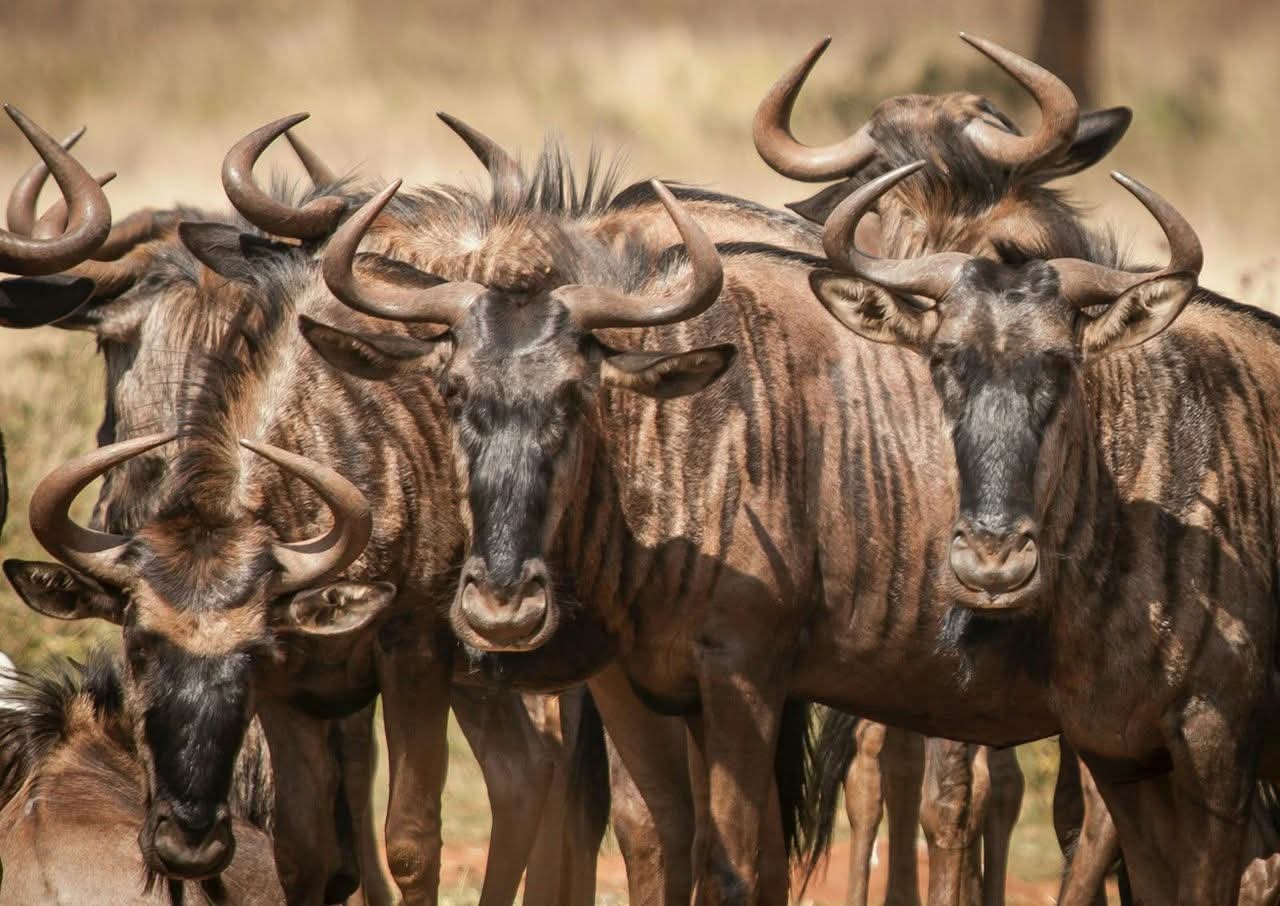
Witness the greatest wildlife spectacle on Earth — 1.5 million wildebeest thundering across the Serengeti in an endless cycle of life.

Follow one of Africa’s most remarkable wildlife journeys across the Serengeti.
Imagine watching thousands of wildebeest moving across an open plain, zebras grazing nearby and a lion resting on a rocky outcrop in the distance. This is the kind of scene that makes a Great Migration safari in Tanzania so memorable.
Every year, more than a million wildebeest move through the Serengeti ecosystem in search of fresh grass and water. Zebras and gazelles travel alongside them, while predators follow the herds across the plains. At certain times of the year, the journey brings newborn calves to the southern grasslands. At others, the herds gather near rivers, where crossing attempts can create some of the most dramatic moments in African wildlife viewing.
At Explore Jambo Maasai, we help you choose where to go and when to travel based on the experience you want. Whether you are hoping to see the calving season in Ndutu, explore the central Serengeti or spend time in the north during the river-crossing period, we can help you plan a safari around the season, your budget and your travel style.
Your journey begins with choosing the right place at the right time.
What Is the Great Wildebeest Migration?
The Great Wildebeest Migration is the annual movement of wildebeest across the Serengeti ecosystem in Tanzania and the Maasai Mara in Kenya. The herds follow seasonal rainfall and the growth of fresh grass, moving between grazing areas as conditions change.
Although wildebeest are the stars of the migration, they are not alone. Zebras and gazelles share the same landscapes, while lions, cheetahs, leopards, hyenas and crocodiles form part of the wider wildlife story.
What makes the migration so fascinating is that it never feels the same twice. One day, you might watch a herd stretching across the horizon. Another day, you might find young calves taking their first steps, a group of lions resting in the shade or wildebeest gathering along a riverbank.
The migration is not a single event that happens on a particular date. It is a continuous journey shaped by weather, grazing conditions and the movement of the animals themselves.
That is why choosing the right region for your travel dates matters. A safari planned around the southern plains in February will offer a different experience from one spent in Northern Serengeti in August.
Where Can You See the Great Migration in Tanzania?
The Serengeti covers a vast area, and the herds move between different regions throughout the year. Each area offers its own scenery, wildlife encounters and reasons to visit.
1. Ndutu and the Southern Plains
Typical season: January to March
For many travellers, the southern plains offer one of the most memorable periods of the migration. Around Ndutu and the adjoining grasslands of the Ngorongoro Conservation Area, wildebeest gather where fresh grazing provides suitable conditions for calving.
During this period, many calves are born within a relatively short window. You may see newborn wildebeest finding their feet, herds moving across the short grass and predators watching for an opportunity to hunt.
The experience is about more than the number of animals. It is a chance to observe the natural cycle of life on the plains, often with plenty happening around you.
Ndutu is particularly rewarding for wildlife photographers, nature lovers and travellers interested in predator behaviour.
Best for: Calving-season wildlife, photography and predator sightings.
Suggested safari: A 4- to 6-day itinerary focused on Ndutu, with an optional Ngorongoro Crater visit depending on your route.
2. Central Serengeti: Seronera
Typical period for migration viewing: April to June, although wildlife is present throughout the year
Central Serengeti is a wonderful place to experience the wider wildlife of Tanzania. Its open plains, rocky kopjes and scattered trees provide habitat for lions, leopards, cheetahs, elephants, giraffes and many other species.
As the migration herds move away from the southern plains, parts of the central Serengeti may offer opportunities to encounter large groups of wildebeest and zebras. Their exact location depends on seasonal conditions.
One advantage of this region is that your safari does not depend entirely on finding the migration. Even when the main herds are elsewhere, the central Serengeti can deliver excellent wildlife viewing.
Best for: First-time safari travellers, big-cat sightings and a varied Serengeti experience.
Suggested safari: A 4- to 7-day journey combining Central Serengeti with Tarangire or Ngorongoro Crater.
3. Western Serengeti and the Grumeti Region
Typical period: May to July, depending on rainfall and herd movements
The Western Corridor brings a different character to the safari. Here, open grasslands give way to river valleys and woodland, and the herds continue their movement towards the north.
The Grumeti River is an important feature of this region. During the migration, some wildebeest may attempt to cross its waters, where crocodiles inhabit parts of the river system. These encounters can be dramatic, but they are unpredictable and depend on where the herds are moving.
The western region can also appeal to travellers who prefer exploring less familiar parts of the Serengeti rather than following the busiest routes.
Best for: A more remote safari atmosphere, changing landscapes and seasonal migration viewing.
Suggested safari: A 5- to 7-day itinerary combining the Western Corridor and Central Serengeti, subject to seasonal conditions and camp availability.
4. Northern Serengeti and the Mara River
Typical period: July to October, sometimes extending beyond these months
Northern Serengeti is one of the best-known destinations for travellers hoping to witness the wildebeest migration near the Mara River.
During the dry season, herds may gather along the riverbanks before attempting to cross. When a crossing happens, the scene can be extraordinary: wildebeest crowding together, animals moving down steep banks and the herd surging through the water.
But the river does not operate on a timetable. The animals may wait for hours or days, change direction or cross at a different point. Sometimes, visitors spend their time watching the herds grazing and moving through the northern plains rather than witnessing a crossing.
That uncertainty is part of the experience. Spending several days in the region gives your guide more opportunities to follow the herds as their movements change.
Northern Serengeti also offers beautiful scenery and excellent opportunities to see resident wildlife.
Best for: Travellers interested in river-crossing behaviour, photography and a dedicated northern safari.
Suggested safari: A 4- to 7-day Northern Serengeti itinerary, or a longer journey that also explores the central region.
Best Time to See the Great Migration in Tanzania
There is no single month that is best for everyone. The right time depends on what you hope to see and which part of the Serengeti you want to explore.
Use this month-by-month guide as a starting point when planning your Great Migration safari in Tanzania.
January: The southern plains
The herds often gather around the southern Serengeti and Ndutu. Calving activity may be underway, offering opportunities to see newborn wildebeest and the predators that follow the herds.
February: Calving season
February is commonly one of the main calving-season months. Large herds may spread across the southern plains, making this an appealing time for wildlife photography and observing animal behaviour.
March: Life on the plains
Calving may continue into March, although conditions vary. As grazing changes, some herds begin moving towards other parts of the ecosystem.
April: Seasonal movement
Rainfall shapes the herds' movements. Central Serengeti and routes towards the Western Corridor may become relevant, while some animals can remain in the south.
May: Towards the west
Some herds move through the central and western regions in search of fresh grazing. The Western Corridor may offer opportunities to observe migration activity.
June: Following the herds north
Migration activity may continue through the western and central areas as some groups move towards river systems and northern grazing grounds.
July: Northern Serengeti
The north becomes an important destination for migration viewing. Some herds may gather near the Mara River, although the timing of any crossing remains uncertain.
August: River-crossing season
August is a popular month for Northern Serengeti safaris. Travellers may find large herds near the river, but crossings cannot be guaranteed.
September: Wildlife in the north
Northern Serengeti can continue to offer migration viewing alongside lions, elephants and other resident wildlife. The exact location of the herds depends on local conditions.
October: Changing conditions
Some herds may remain in the north while others begin moving towards central and southern areas. Seasonal rainfall can influence the timing of their return.
November: The journey south
Short rains may encourage movement towards the southern plains. Herds can travel along different routes depending on where fresh grazing becomes available.
December: Back towards Ndutu
The southern plains may begin attracting larger concentrations of wildebeest again as the annual cycle continues. The timing of this movement varies from year to year.
A note about timing: These are typical seasonal patterns, not fixed dates. Rainfall and grazing conditions can change the location of the herds. We recommend choosing your itinerary around the most likely seasonal region while keeping some flexibility in your expectations.
Choose the Great Migration Experience That Suits You
Not every traveller comes to the Serengeti for the same reason. Some want to see newborn calves, others dream of a Mara River crossing, and many simply want time in the wilderness with exceptional wildlife viewing.
Calving Season Safari
If you are fascinated by animal behaviour, Ndutu during the calving season is an excellent place to start. You may see newborn wildebeest, large grazing herds and predators sharing the same landscape.
This experience is particularly appealing to wildlife photographers and travellers who want to understand the migration beyond the famous river crossings.
Northern Serengeti River-Crossing Safari
For many visitors, watching wildebeest gather near the Mara River is a lifelong ambition. A safari in Northern Serengeti during the typical crossing period gives you an opportunity to explore the relevant river areas and follow the herds.
A few nights in the region can provide more flexibility, although no itinerary can guarantee a crossing.
Classic Serengeti Wildlife Safari
If this is your first trip to Tanzania, you may prefer a safari that combines migration viewing with the wider wildlife experience. Lions, elephants, giraffes, leopards and other animals can make the journey rewarding even when the main herds are elsewhere.
Central Serengeti, Tarangire and Ngorongoro Crater can be combined where the route and travel dates make sense.
Private Great Migration Safari
A private safari is ideal if you want more control over your daily schedule. You travel with your own guide and vehicle, allowing the day's activities to be adjusted around wildlife sightings, your interests and how much time you want to spend in the field.
This option works well for couples, families, photographers and travellers with particular interests.
Fly-In Great Migration Safari
If you have limited time or would rather spend less of your holiday on the road, a fly-in safari may be a good choice. Domestic flights can connect you with airstrips serving different parts of the Serengeti, depending on the route and flight schedule.
Fly-in arrangements can reduce transfer time, although luggage restrictions and flight availability must be checked before booking.
Recommended Great Migration Safari Packages
The number of days you have available will influence how much of the Serengeti you can explore. These itinerary options offer different ways to experience the migration.
4-Day Northern and Central Serengeti Migration Safari
A shorter journey for travellers who want to explore two important Serengeti regions without committing to a longer holiday. The route can be planned around your dates and the areas most relevant to seasonal migration activity.
Ideal for: Travellers with limited time who want a focused Serengeti safari.
Button: Explore the 4-Day Northern and Central Serengeti Safari
5-Day Ndutu Calving Season Safari
Spend time on the southern plains during the typical calving season, when large herds and newborn wildebeest may be present. Depending on the itinerary, you may also visit Ngorongoro Crater for a different wildlife experience.
Ideal for: Travellers visiting between December and March who are interested in the calving season.
6-Day Northern Serengeti Migration Safari
Allow several days to explore Northern Serengeti and the areas around the Mara River. Additional time in the region gives you more flexibility to follow changing herd movements rather than relying on a single day for migration viewing.
Ideal for: Travellers whose main priority is exploring Northern Serengeti during the migration season.
7-Day Great Migration Safari
A longer safari can combine Central Serengeti with Northern Serengeti, allowing you to experience different landscapes and wildlife areas in one journey. The final route should reflect your travel dates, the expected seasonal movement and accommodation availability.
Ideal for: Travellers who want a more comprehensive Serengeti experience.
All itineraries can be discussed as private journeys. Group joining may be possible on selected routes and dates, but a departure must be confirmed before travel arrangements are finalised.
Where to Stay During Your Great Migration Safari
Choosing where to sleep is an important part of planning your migration safari. The right camp can put you closer to the areas you want to explore, reducing unnecessary driving and giving you more time for game drives.
Budget and Value Accommodation
Budget-friendly safaris focus on making the wildlife experience accessible while keeping costs under control. Depending on the route, accommodation may include simpler lodges or camps outside the most sought-after migration locations.
Availability and transfer distances should be checked carefully, particularly when you want to focus on a specific part of the Serengeti.
Mid-Range Lodges and Tented Camps
Mid-range accommodation offers a balance between comfort, location and value. Depending on the property, you may have an en-suite room or tent, full-board meals and convenient access to wildlife-viewing areas.
This is a practical option for travellers who want comfortable accommodation without the higher cost of some premium camps.
Luxury Lodges and Tented Camps
Luxury accommodation is suited to travellers who value additional comfort, attentive service, distinctive settings and carefully selected locations. Some properties also offer excellent opportunities to enjoy the landscape between game drives.
The best choice depends on your dates and whether your priority is being close to the migration, enjoying a particular camp or combining both.
Seasonal and Mobile Camps
Some camps operate seasonally or move between locations to follow the broad pattern of the migration. They can be especially useful for travellers whose main priority is seasonal wildlife viewing.
Operating periods and availability vary, so each camp should be checked against your intended travel dates.
At Explore Jambo Maasai, we match accommodation to your plans, comfort preferences and budget. We confirm the available properties and final costs before your booking is finalised.
How to Get to the Great Migration
For most international visitors, Kilimanjaro International Airport is a common arrival point for a northern Tanzania safari. Depending on your itinerary, Arusha Airport or a domestic flight connection may also be suitable.
Travelling by Road
A road safari from Arusha can include destinations such as Tarangire, Ngorongoro and Serengeti. This is a good option if you want to experience more of northern Tanzania along the way.
Driving times depend on the route, weather and road conditions. Travelling to more remote parts of the Serengeti can take considerable time, so it is worth allowing enough days to enjoy the parks rather than spending most of your holiday in transit.
Travelling by Domestic Flight
Flying into an airstrip serving your chosen Serengeti region can reduce transfer time and make a shorter safari more practical. It can also be useful when travelling to remote camps.
Flights depend on the season, schedule and available seats. Baggage allowances, ground transfers and the total cost should all be considered when comparing a fly-in safari with a road itinerary.
Combining Tanzania and Kenya
The Great Migration moves across the wider Serengeti-Maasai Mara ecosystem, so some travellers choose to explore both Tanzania and Kenya.
A cross-border safari requires careful planning around flights, border procedures, park visits and the time available. If you would like to include both countries, let us know when you enquire so we can assess the most practical route.
Responsible Wildlife Viewing
One of the most rewarding parts of a safari is seeing animals behave naturally, without interference. Respectful wildlife viewing helps protect both the animals and the experience for other visitors.
During your safari, we encourage you to:
-
Follow your guide's instructions and all park regulations.
-
Keep a respectful distance from wildlife.
-
Avoid crowding animals or blocking their movement.
-
Keep noise low during wildlife encounters.
-
Never pressure your driver to chase animals for a photograph.
-
Take all litter with you and respect the natural environment.
River crossings can be unpredictable and may require patience. Sometimes the most memorable moments are not dramatic crossings, but watching a herd move slowly across the plains or observing predators from a safe distance.
Plan Your Great Migration Safari with Explore Jambo Maasai
The Great Migration is not just about a single river crossing. It is a year-round wildlife journey, with each season offering a different view of life on the Serengeti plains.
You might be drawn to the southern plains during calving season, the wide-open landscapes of Central Serengeti or the possibility of seeing herds near the Mara River in the north. Whatever interests you most, the right safari starts with understanding when you plan to travel and what you want to experience.
Tell us your travel dates, the number of people travelling and your preferred accommodation level. We will help you explore the available options and prepare a safari proposal based on your plans and confirmed arrangements.
Let's plan a Great Migration safari that works for you.